Strong third-quarter earnings have provided a supportive backdrop for global equities. However, the US midterm elections have intensified scrutiny of AI investment, highlighting the sensitivity of valuations to changing growth expectations. We remain focused on earnings visibility, while the broadening of earnings growth offers opportunities to diversify portfolio returns.
Earnings growth extending beyond market leaders
According to J.P. Morgan’s 6 November tracker, with 81% of US companies and 75% of the European reporting universe having released results, earnings growth was running at 24% and 28%, respectively. Earnings beat expectations at 84% of US companies and 60% in Europe, while revenues increased by 12% in both regions[1].
Energy was the largest contributor, but growth remained solid excluding the sector, at 17% in the US and 13% in Europe. Information technology also delivered strong earnings growth. Encouragingly, estimates for the fourth quarter and 2027 had continued to rise. Based on the six Magnificent Seven companies that had reported, earnings growth outside the group exceeded that within it, although Nvidia’s results were still outstanding. This broader participation strengthens the earnings backdrop, with more companies contributing to earnings growth beyond the largest technology names[2].
Midterms sharpen the focus on AI investment
The Democratic election victory added a new source of uncertainty to an AI trade already facing questions over investment returns. Investors became concerned that greater scrutiny and changes in state-level policy could slow data centre construction. On 5 November, the Nasdaq fell 5.5%, entering correction territory, while the S&P 500 declined 4.4%. Selling also affected industrial and energy companies exposed to AI infrastructure.
While divided government limits the scope for sweeping federal legislation, state-level permitting decisions and additional development requirements could still delay investment. Investors are therefore reassessing the pace of AI infrastructure expansion, although there is little evidence yet of a sustained decline in underlying AI demand.
Strong results must translate into future returns
The contrast between robust Q3 technology earnings and falling share prices highlights the market’s forward-looking nature. Construction delays could postpone orders for semiconductors, networking equipment and power infrastructure, while higher costs could weaken project returns. More disciplined spending could support cash flow at large cloud providers, provided their revenue growth remains resilient.
A slowdown in US AI spending would also have global consequences, affecting Asian semiconductor producers and European equipment suppliers whose revenues depend on the expansion of AI infrastructure. Regional diversification may therefore provide less protection than expected when companies across regions depend on the same AI spending cycle. Guidance on orders, capacity utilisation and AI monetization will be critical to distinguishing temporary delays from weaker underlying demand.
Maintaining conviction, broadening opportunities
The combination of broader earnings growth and greater uncertainty around AI investment reinforces the case for selectivity. We retain exposure to structural technology growth, while focusing on visible demand, credible monetization and the conversion of investment into cash flow. Valuations should allow for potential delays and more moderate spending growth. Beyond technology, improving earnings across sectors provide opportunities to diversify the sources of portfolio returns.
United States
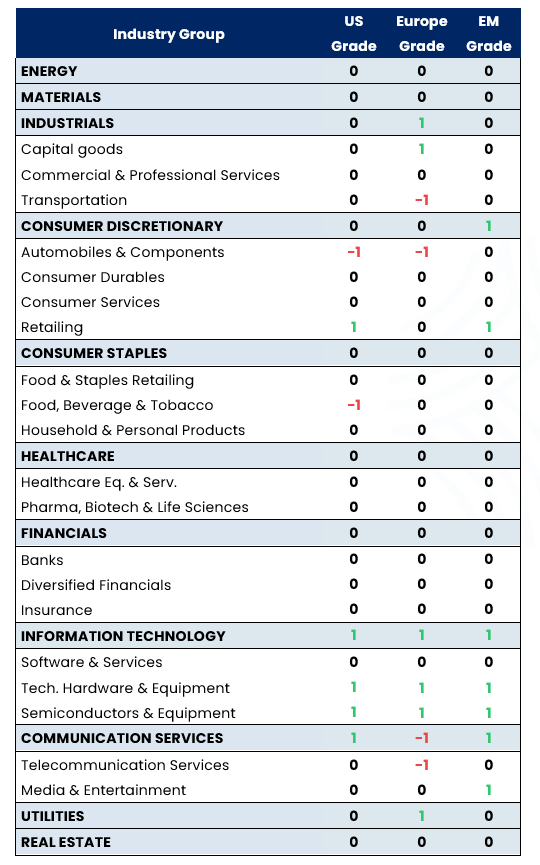
Against this backdrop, information technology remains a strategic overweight, including semiconductors and equipment, and technology hardware and equipment. Strong earnings momentum, rising paid AI usage and continued investment in AI infrastructure support our conviction. However, financing needs, pressure on free cash flow and power supply constraints warrant close attention, with returns on AI investment remaining central to our assessment.
In healthcare, strong outperformance over the past month has driven a sharp expansion in valuation multiples, with US biopharma valuations now elevated relative to historical levels. This has made the risk-return balance less compelling, prompting us to take profits and downgrade the sector from overweight to neutral. Pharmaceuticals and biotechnology move to neutral, while we retain an overweight in life sciences.
Europe
European equities have advanced overall since the last committee meeting, despite persistent market volatility. Solid corporate earnings supported sentiment, although oil price fluctuations, bond market pressures and political uncertainty in France tempered investor confidence. As in other markets, concerns about returns on AI investment weighed on technology shares and contributed to market swings. Healthcare and consumer staples were the best performers over the period, benefiting from a rotation towards defensive sectors.
As in the US, we downgraded European healthcare from overweight to neutral, reflecting stretched valuations following recent outperformance. Within healthcare, we also downgraded pharmaceuticals and biotechnology to neutral.
We maintain our grades on the other European sectors:
- We remain positive on industrials (particularly companies exposed to power generation, electrification and grid modernisation), information technology (supported by expected semiconductor capacity additions) and utilities (benefiting from structural demand from electrification and grid investment, alongside reasonable valuations).
- We remain negative on communication services, reflecting competitive and pricing pressures, modest growth prospects and less compelling valuations.
- We remain neutral on the other sectors.
Emerging markets
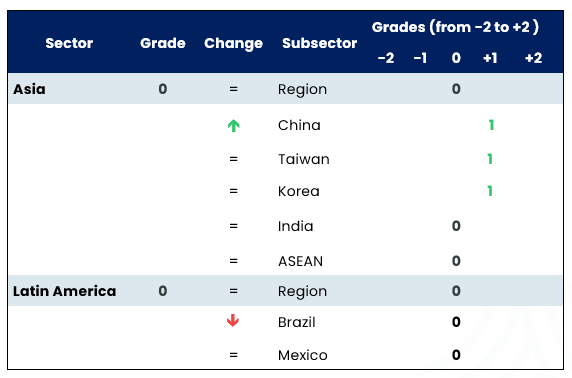
Emerging Market equities are undergoing a sharp rotation, with previous outperformers such as Korea, Taiwan and Brazil facing corrections, while laggards including China, India and Mexico have regained momentum. This reversal reflects a broader shift away from crowded momentum trades towards value and previously overlooked markets, amid growing scrutiny of AI investment sustainability. While technology fundamentals remain supportive, slowing earnings revisions and heightened uncertainty around AI infrastructure spending require greater selectivity. Against this backdrop, we are balancing our conviction in technology with tactical opportunities in China, with a more cautious stance towards Brazil and India.
- China was tactically upgraded to overweight following an extended period of underperformance, which has left valuations and positioning increasingly attractive, particularly in Internet and consumer stocks. The sharp correction in major technology platforms[3], alongside domestic market support and easing oil prices, creates scope for a recovery as investors diversify away from crowded Asian technology exposures. While macroeconomic fundamentals remain weak, export resilience in strategic industries and a relatively stable US-China trade relationship provide additional support to this tactical positioning.
- We maintain our overweight stance on the technology sector following the recent correction, supported by more attractive valuations and significantly lighter investor positioning. Unlike previous selloffs driven primarily by excessive positioning, the latest weakness reflects growing concerns over AI monetization, infrastructure financing and regulatory constraints, alongside a moderation in earnings upgrades. Nevertheless, earnings revisions remain positive, while resilient semiconductor demand and strong revenue growth at TSMC reinforce the underlying investment case, creating potential for a rebound despite continued near-term volatility.
- The recent market rotation has prompted a recalibration of portfolio exposures, including a downgrade of financials and banks to neutral after their role as effective hedges against technology weakness. At the country level, Brazil’s position was reduced in the portfolio following election developments and disappointing market performance. India’s recent recovery has been supported by falling oil prices and investors covering underweight positions. While expensive valuations continue to constrain its relative attractiveness.
Global convictions
The table below summarises our current highest conviction regional, country and sector positioning following the latest Strategic Equity Committee.
[1] Source: Bloomberg © November 6th 2026
[2] Source: Bloomberg © November 6th 2026
[3] Source: Bloomberg © November 6th 2026


