Warum in die Onkologie investieren?
Im Gesundheitswesen bleibt die Onkologie eines der größten und aktivsten therapeutischen Segmente.
Krebs ist eine der entscheidenden medizinischen Herausforderungen unserer Zeit. In den USA wird erwartet, dass rund 38 % der Menschen im Laufe ihres Lebens eine Krebsdiagnose erhalten[2], und Krebs zählt weltweit nach wie vor zu den häufigsten Todesursachen. Gleichzeitig zieht die Onkologie einen überproportionalen Anteil an wissenschaftlichen Talenten, klinischer Forschung und Brancheninvestitionen an.
Der Fortschritt ist sichtbar. Die Überlebensraten von fünfjährigen Krebserkrankungen haben sich seit den 1970er Jahren erheblich verbessert, unterstützt durch Früherkennung, besseres Screening und gezieltere Behandlungen. Allein im Jahr 2025 hat die US-Arzneimittelbehörde (USFDA) 19 neue Krebsmedikamente, 16 neue diagnostische Tests sowie erweiterte Anwendungen für bestehende Krebstherapien zugelassen[3]. Jede Zulassung kann die Behandlungslandschaft erweitern. Für Anleger können regulatorische Fortschritte auch dazu beitragen, Unternehmen mit differenzierter Wissenschaft, stärkeren Pipelines und klarerem langfristigem Wachstumspotenzial zu identifizieren. Von der Auflegung der Strategie im Jahr 2019 bis Ende 2025 hat unsere Onkologie-Strategie jedes Jahr Anteile an Unternehmen gehalten, die für etwa sechs von zehn neu zugelassenen Krebsmedikamenten weltweit verantwortlich waren[4], was sowohl die Breite des heutigen Innovationszyklus als auch Candriams langjährigen Fokus auf klinisch differenzierte Unternehmen verdeutlicht.
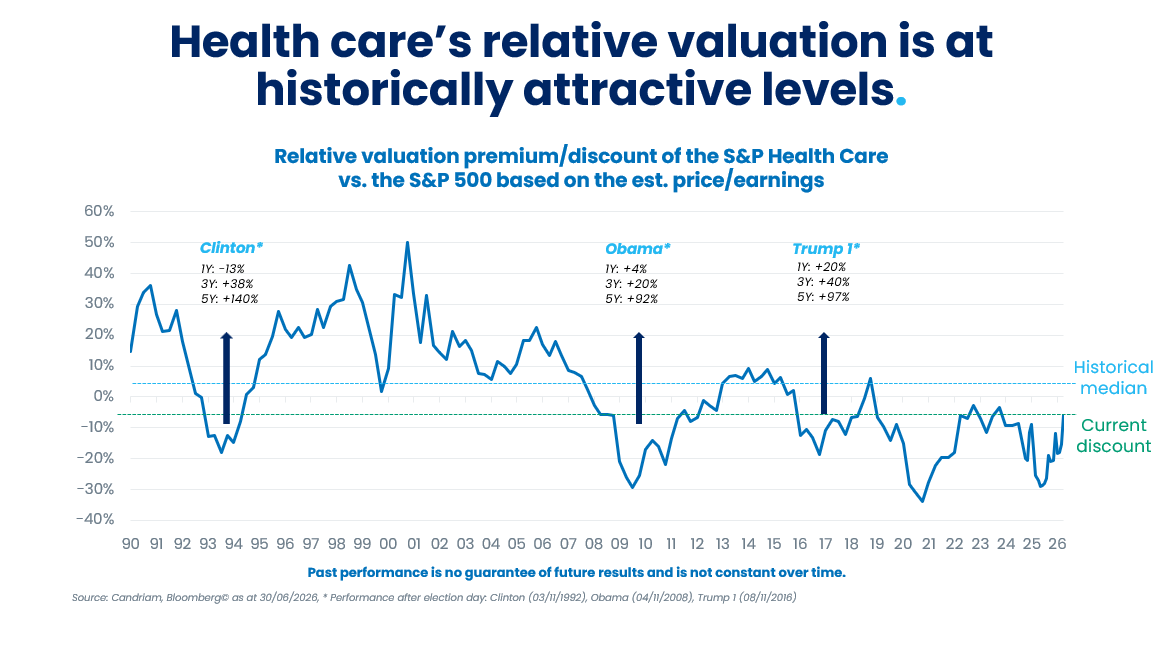
Darüber hinaus notierte das Gesundheitswesen zuletzt mit einem beträchtlichen Abschlag gegenüber dem breiteren US-Aktienmarkt, einem Niveau, das in den letzten drei Jahrzehnten nur wenige Male zu beobachten war. Historisch gingen ähnliche Phasen mit Abschlägen stärkeren relativen Renditen voraus:
Wir sind der Ansicht, dass erfolgreiche Investitionen in das Gesundheitswesen einzigartige, kombinierte Expertise erfordern. Aus diesem Grund bringen wir Gesundheitsinvestoren und wissenschaftliche Spezialisten zusammen, darunter promovierte Fachleute in der Biologie, Biotechnologie und Onkologie. Dieses kombinierte Wissen hilft uns, sowohl das finanzielle Profil von Unternehmen als auch die klinische Relevanz ihrer Innovationen zu beurteilen.
Präzisions-Onkologie ist ein Paradigmenwechsel
Der wichtigste Wandel in der Onkologie ist der Übergang von einer breiten Behandlung zu einer präzisen Intervention. Anstatt Krebs nur nach Ort zu behandeln - Lunge, Brust, Dickdarm - zielt die onkologische Innovation zunehmend auf die pathologischen Treiber von Krankheiten ab. Mehrere neuartige Trends verändern das Feld:
- Selektive Molekulardiagnostik:Flüssigbiopsien zur Messung der zirkulierenden Tumor-DNA können helfen, mikroskopisches Krebswachstum früher zu erkennen als herkömmliche Bildgebung in einigen Umgebungen.
- Gezielte Therapien: Behandlungen werden zunehmend nach spezifischen molekularen Merkmalen in Krebsgeweben entwickelt und mit ausgeklügelten Biomarkerstrategien hochgradig erfasst.
- Immuntherapie und Zelltherapie: Die Neuverdrahtung des Immunsystems des Patienten wird zu einem zentralen Instrument im Kampf gegen Krebs.
- Radiopharmazeutika: Zielradiotherapeutika können neue Behandlungswege für ausgewählte Krebsarten eröffnen.
- KI-fähige Entdeckung und Studiendesign: Daten können helfen, Patientengruppen zu identifizieren, die pharmakologische und klinische Forschung zu beschleunigen und die Wahrscheinlichkeit eines klinischen Erfolgs zu erhöhen.[5]
Diese Fortschritte verändern auch die Ökonomie der Onkologie. Der US-Markt für Präzisionsokologie wurde im Jahr 2025 auf rund USD 40 Mrd. geschätzt[6] und dürfte im nächsten Jahrzehnt stark wachsen. Das Wachstum wird nicht linear sein. Fehlschläge bei klinischen Studien, Preisdruck, Kostenerstattungsentscheidungen und regulatorische Ergebnisse können zu einer starken Streuung zwischen Gewinnern und Verlierern führen. Deshalb ist Selektivität wichtig.


