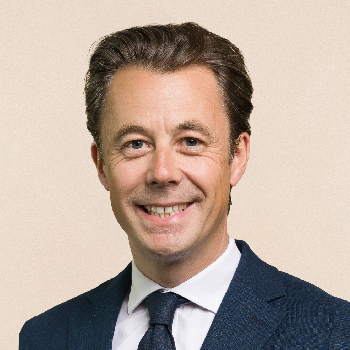
Nicolas Forest
Chief Investment Officer


Here’s what you’ll hear about:


Markets continue to hover near highs despite the war in Iran, with equity indices and credit spreads signalling risk appetite. At the same time, long‑dated interest rates remain elevated due to higher inflation expectations. This mix—risk assets strong, rates high—shows investors are assuming de‑escalation and manageable economic spillovers, even as policy trade‑offs for central banks and governments become more complex.
Roughly 20% of global oil and liquefied natural gas flows through the Strait. The halt in tanker traffic has lifted spot oil prices and raised concerns for LNG, with Qatar declaring force majeure on part of its capacity. Beyond energy, inputs such as naphtha, helium (for semiconductors), sulphur (fertilisers), and other industrial materials move through this route. Persistent disruption would reverberate across supply chains, including aviation and bunker fuels, and could slow goods shipping from Asia to Europe and the US.
Hyperscalers (Meta, Microsoft, Alphabet, Amazon) are committing exceptionally large CapEx budgets, which are flowing through the AI supply chain. Earnings momentum at key enablers (e.g., advanced memory and semiconductor names) has accelerated. Crucially, monetisation is improving—LLM developers such as Anthropic and OpenAI are starting to convert usage into meaningful revenues. Corporate AI adoption remains early: only a small share of firms have embedded AI across operations, leaving ample runway.
A structurally weaker US dollar over the medium term, rising use of non‑USD currencies in trade, and China’s role as a business partner are supportive. Valuations remain attractive versus developed markets, and inflows into EM are picking up. Energy’s strategic importance and the competitiveness of renewables at higher oil prices add further tailwinds for parts of EM.
We see opportunity to add duration as long‑end yields approach multi‑year highs, but we are patient on timing given near‑term inflation and policy risks. In credit, we prefer investment grade—supported by solid fundamentals and attractive new‑issue concessions—while remaining cautious on high yield. In Europe especially, high‑quality IG offers yields around 4–5%, providing compelling carry with manageable cyclical risk


Obtenga información más rápidamente con un solo clic