
De AI-schuldengolf
De infrastructuurboom van AI trekt enkele van 's werelds grootste technologiebedrijven dieper in de schuldenmarkten.


Gedurende een groot deel van het afgelopen decennium konden hyperscalers aanzienlijke investeringen financieren uit hun operationele kasstromen. AI heeft die vergelijking veranderd. De kapitaaluitgaven zouden in 2026 kunnen oplopen tot 750 miljard dollar, waarbij de schuld naar verwachting ongeveer een derde daarvan zal financieren.[1]
De leensnelheid is even groot als de omvang. De uitgifte van investment-grade technologie is sterk gestegen in 2025 en heeft nieuwe hoogtepunten bereikt in 2026[2].
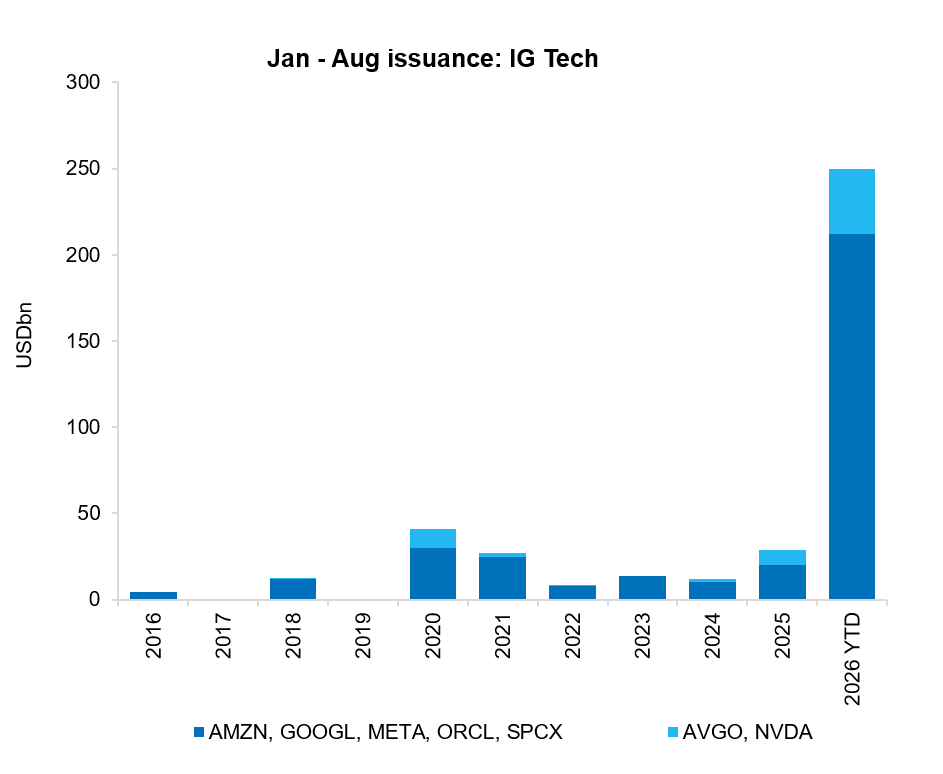
De uitgifte van investment grade obligaties van januari tot augustus door Amazon, Alphabet, Meta, Oracle, SpaceX, Broadcom en Nvidia, met miljarden dollar.
Bron: CANDRIAM, Bloomberg, per 31 januari 2026.
Ondertussen reikt de vereiste financiering veel verder dan hyperscaler obligaties. Een enkel datacenterproject kan verplichtingen creëren tussen vastgoedeigenaren, nutsbedrijven, leveranciers van apparatuur en particuliere geldschieters, terwijl toegang tot stroom en goedkeuring van de planning kan bepalen wanneer het begint met het genereren van contant geld.

De infrastructuurboom van AI trekt enkele van 's werelds grootste technologiebedrijven dieper in de schuldenmarkten. In onze laatste paper gaan we na hoe deze financieringsgolf het bedrijfskrediet verandert, de passieve exposure verhoogt en risico’s verspreidt over datacenters, nutsbedrijven en private markten.
Ga na hoe de AI-schuldengolf bedrijfsobligaties hervormt en waarom het voor beleggers belangrijk is om inzicht te krijgen in de cashflow, de blootstelling aan de benchmark en de verplichtingen achter elk project.

Bedrijfsobligaties kunnen rustig aanvoelen omdat het rendement meestal stabiel is. Maar bedrijfsobligaties zijn asymmetrisch: het opwaarts potentieel is beperkt tot de coupon, terwijl het neerwaarts potentieel permanent kan zijn als de fundamentals verzwakken of de liquiditeit verdwijnt.
[1] Goldman Sachs, Hoe AI-schuld de kredietmarkten hervormt, 5 augustus 2026
[2]Bron: Candriam, Bloomberg per 31 augustus 2026


Krijg sneller informatie met één enkele klik